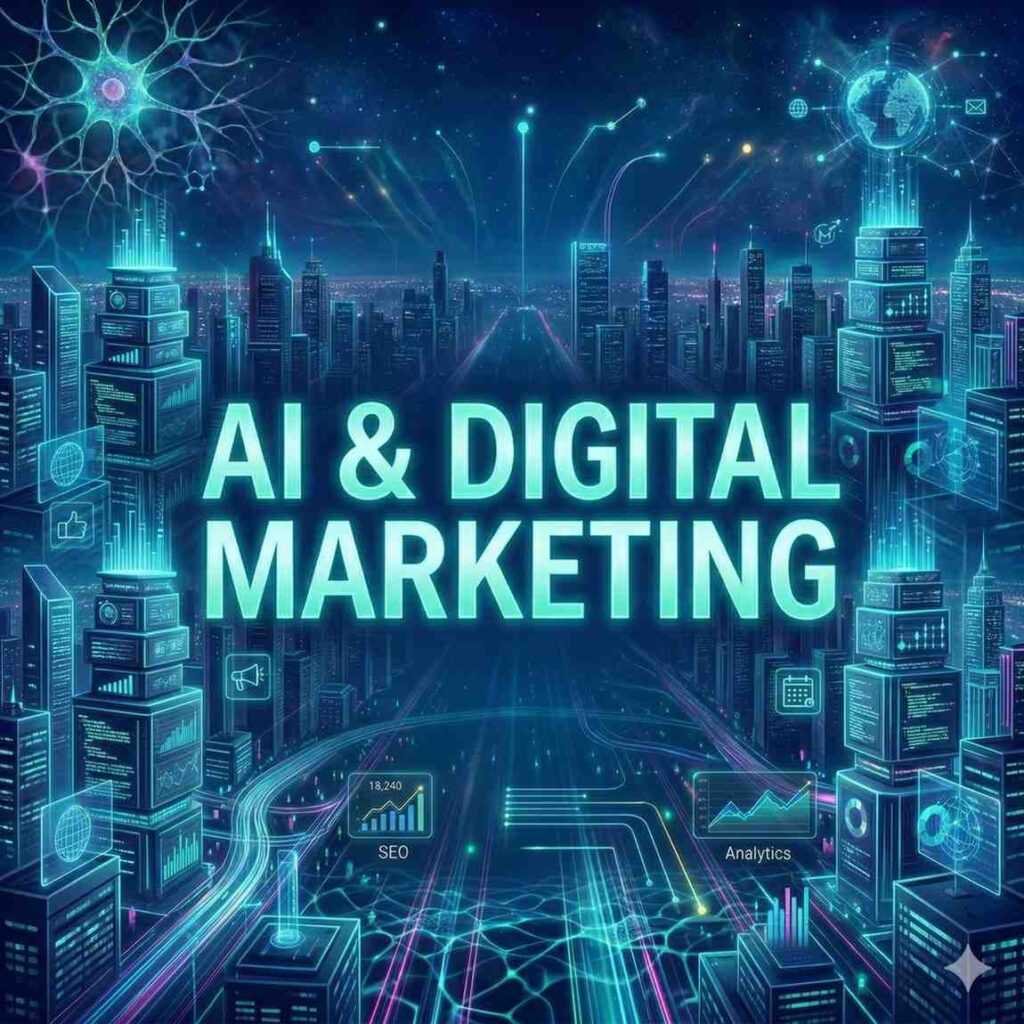
AI in Digital Marketing
Summary Artificial Intelligence (AI) is rapidly transforming digital marketing by enabling faster content creation, improved targeting, and automation of repetitive tasks. While AI tools are increasing efficiency and reshaping marketing strategies, they are not completely replacing human roles but rather changing the nature of work. This article provides a structured overview of how AI in digital marketing is used in content creation, compares AI-generated and human content, examines the impact of AI on jobs, explores future career opportunities, and discusses the growing influence of AI-driven virtual influencers. Table of Contents Introduction AI Tools for Content Creation in Digital Marketing AI vs Human Content: A Comparative Perspective Impact of AI on Jobs: Replacement or Transformation? Future Career Opportunities in AI (Top Roles) The Rise of AI Influencers Strategic Implications for Businesses Conclusion Introduction Artificial Intelligence has become a central component of modern digital marketing, influencing how businesses create content, interact with customers, and optimize their strategies. With the availability of advanced AI tools, tasks that previously required significant time and human effort can now be performed more efficiently. However, this shift also raises important questions regarding content quality, job security, and the future role of human professionals in an AI-driven environment. AI Tools for Content Creation in Digital Marketing AI-powered tools are widely used to generate written, visual, and video content. These tools assist marketers in improving productivity and maintaining consistency across platforms. Content generation platforms, automation tools, and analytics systems allow businesses to produce large volumes of content in a relatively short time. Common applications of AI in content creation include: Generating blog posts, product descriptions, and social media captions Automating email marketing campaigns Creating visual content and basic video formats Analyzing audience behavior to improve content relevance The primary advantage of these tools lies in their ability to save time and reduce operational costs. However, businesses must ensure that the generated content aligns with their brand voice and audience expectations. AI vs Human Content: A Comparative Perspective The comparison between AI-generated content and human-created content is an important aspect of modern digital marketing. Both approaches offer distinct advantages and limitations, and their effectiveness depends on the context in which they are used. AI-generated content is typically: Fast and scalable Structured and optimized for search engines Consistent in tone and format However, it may lack: Emotional depth and personal perspective Creativity in complex or nuanced topics Authenticity required for strong audience connection On the other hand, human-created content provides: Original insights and critical thinking Emotional engagement and relatability Contextual understanding of audience needs In practice, the most effective strategy is a hybrid approach where AI is used for efficiency and humans refine the content to ensure quality and authenticity. Impact of AI on Jobs: Replacement or Transformation? One of the most frequently discussed concerns is whether AI will replace human jobs. While AI has the potential to automate repetitive and routine tasks, it is more accurate to view its impact as a transformation rather than complete replacement. AI is particularly effective in handling: Data analysis and reporting Content generation at scale Customer service through chatbots However, roles that require creativity, strategic thinking, and human interaction remain less affected. Instead of eliminating jobs, AI is reshaping them by increasing the demand for skills such as critical thinking, adaptability, and technological proficiency. Therefore, professionals who learn to work alongside AI tools are more likely to remain relevant and competitive in the evolving job market. Future Career Opportunities in AI (Top Roles) The integration of AI into various industries has created new career opportunities that combine technical knowledge with business and marketing skills. Some of the most promising roles in the AI-driven landscape include: AI Content Strategist Digital Marketing Automation Specialist Data Analyst and AI Insights Manager Machine Learning Engineer AI Product Manager Chatbot Developer SEO and AI Optimization Specialist AI Ethics and Governance Specialist Prompt Engineer AI Integration Consultant These roles reflect the growing importance of AI across different sectors and highlight the need for continuous skill development. The Rise of AI Influencers AI influencers, also known as virtual influencers, are digitally created personalities that interact with audiences on social media platforms. These influencers are designed using artificial intelligence and computer-generated imagery, allowing brands to maintain full control over their image and communication. The increasing popularity of AI influencers can be attributed to: Consistency in branding and messaging No risk of personal controversies Ability to operate across multiple campaigns simultaneously However, concerns regarding authenticity and transparency remain important considerations. While AI influencers can support marketing strategies, they are unlikely to fully replace human influencers, especially in areas where genuine human connection is essential. Strategic Implications for Businesses For businesses, the adoption of AI in digital marketing requires a balanced and strategic approach. While AI offers efficiency and scalability, over-reliance on automation can reduce content quality and brand authenticity. Key strategic considerations include: Integrating AI tools without compromising brand identity Combining automation with human creativity Continuously monitoring content performance and audience response Businesses that effectively balance these elements can achieve both operational efficiency and meaningful customer engagement. Conclusion AI is fundamentally reshaping digital marketing by introducing new tools, processes, and opportunities. While it enhances efficiency and enables large-scale operations, it does not eliminate the need for human involvement. Instead, it shifts the focus toward more strategic, creative, and analytical roles. Understanding how to use AI effectively, while maintaining authenticity and human insight, is essential for long-term success. As the technology continues to evolve, businesses and professionals who adapt to these changes will be better positioned to thrive in an increasingly competitive digital environment.